Toys are children’s words and play is their language, Gary Landreth
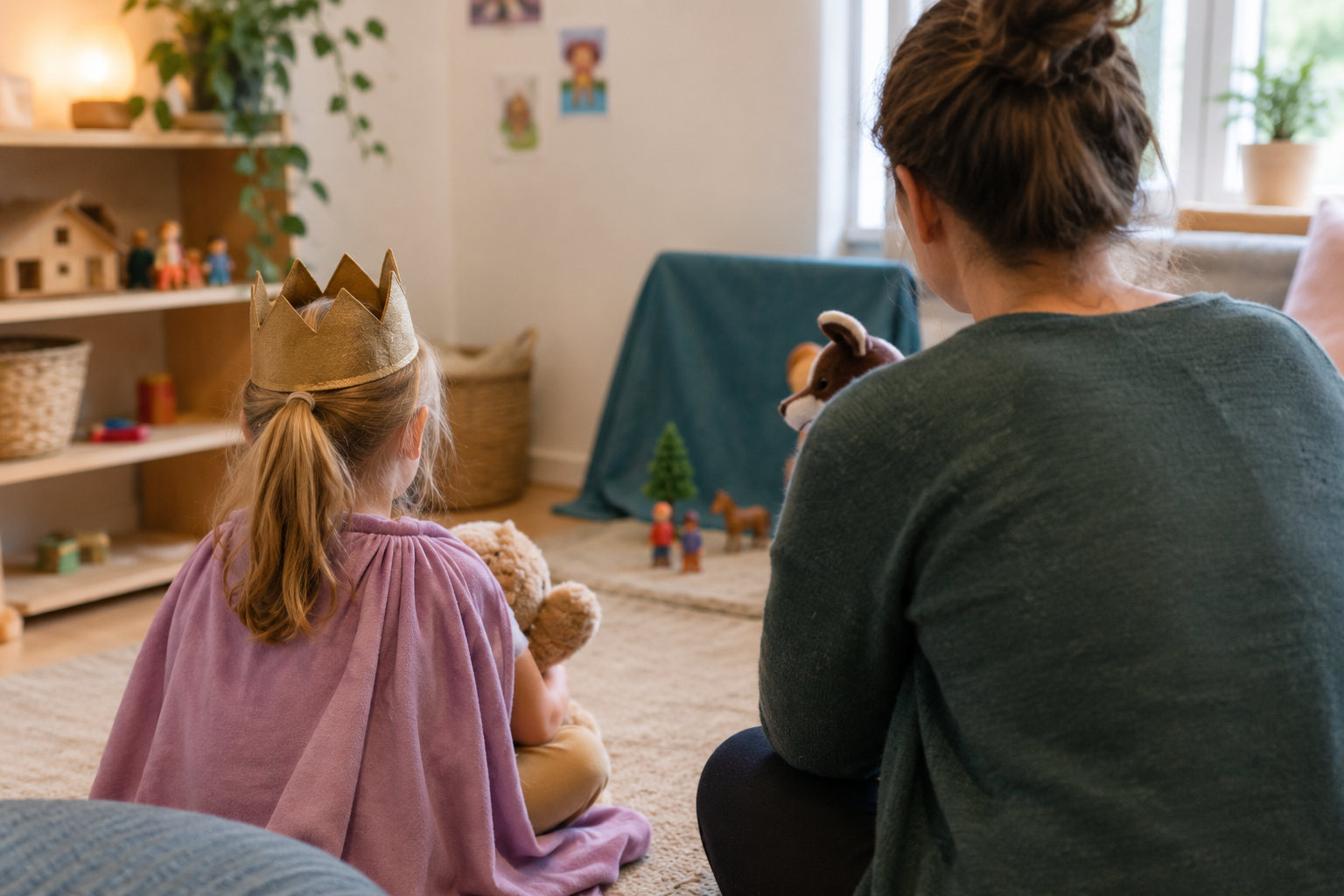
Play is children’s natural language. While adults use words to share what they’re feeling, children communicate and learn about their emotions through play.
During child-centered play therapy, your child is given the space to process their experiences in their own way and at their own pace, within a safe therapeutic relationship. They lead; I follow. There’s no agenda to work through, no questions they have to answer, and nothing they have to explain.
Where the approach comes from
Child-centered play therapy is a form of experiential therapy grounded in the client-centered principles of psychologist Carl Rogers, adapted for young children by Virginia Axline in the 1940s.
It is based on a straightforward idea: given a safe relationship and genuine acceptance, children have a natural drive toward growth and healing. The therapist’s job is to create the conditions for that to happen.
Child-centered play therapy is evidence-based; Research has shown the approach to be effective for children aged 3 to 12 across a broad range of difficulties: anxiety, behavioral problems, grief and loss, trauma, life transitions, and struggles with self-esteem or friendships.
What can change for your child
Through play therapy, children can:
- recognize, understand, and express what they’re feeling
- build self-confidence and a more positive sense of who they are
- cope with psychosomatice complaints, anxiety, stress, sadness, and anger
- process difficult experiences such as loss, separation, or trauma
- strengthen friendships and social skills
What a session looks like
A play therapy session lasts 45 minutes, providing a safe space where the child leads the way to express their feelings, thoughts, and experiences. Because children naturally communicate through play, they can engage in any form—ranging from sand play to role-play—and choose whether or not to invite the therapist to join in. During non-directive sessions, the therapist’s actions are closely guided by Virginia Axline’s 8 principles:
- Develop a warm, friendly relationship with the child to build a strong therapeutic bond.
- Accept the child exactly as they are without judgment or a desire for them to be different.
- Establish a feeling of permissiveness in the relationship so the child feels completely free to express their emotions.
- Recognize and reflect the child’s feelings back to them, helping the child gain deeper insight into their own behavior.
- Maintain a deep respect for the child’s innate ability to solve their own problems when given the opportunity.
- Do not attempt to direct the child’s actions or conversation; the child leads, and the therapist follows.
- Do not attempt to hurry the therapy along, honoring that healing is a gradual process.
- Establish only necessary limitations to anchor the session to reality and help the child understand their responsibility in the relationship.